
- Navigating the hazards of wines-by-the-glass got you down? How about a wine dispensing machine that dispenses with (haha) all the trouble [Daily Meal]
- Lest you find yourself sans-corkscrew, don’t fret – here are five ways you can open a bottle of wine without one (and no, breaking just the neck isn’t one of them…so there’s your sixth) [Daily Meal]
- You love flash sales for great steals on everything from clothes to shoes to housewares to vacations so check out these flash sale sites focused on wine [Daily Meal]
- A wine that captures the spirit of the Egyptian Revolution in name and taste [Daily Meal]
- A spotlight on “quirky” Oregon wines [WSJ]
- Recent vintages of Cotes du Rhone is disappointing and the NYT Wine Panel waxes nostalgic for the simple wines of days gone by [NYT]
- Robert Parker spawned an army of points-obsessed wine snobs and many in the wine industry are not sad to see him go [Huffington Post]
- A BBC investigation into fake wine in the UK [BBC]
- Another spotlight on Oregon wine makers this week in Vintage America [Eater]
Posted in Uncategorized | Tagged ingeniousness, navigating wine, Quirky WIne, wine on the web | 1 Comment »
*Note: I spent hours slaving over my computer hand-crafting a quiz to help you find the wine you should be drinking!
The link is all the way down at the bottom of this post to encourage you to actually read it.
Also, please take the quiz, post your results, then, if you are so inclined, go out and grab a bottle of the suggested wine and let me know how it goes!
Just the other day I got into a conversation with a coworker who considers herself a passionate, knowledgeable, and sophisticated foodie (one of her twitter accounts is her initials followed by “loves food”) about the fact that she knows nothing about wine – not even what kind she likes. My coworker went on to mention that she usually goes for white wines that are “really sweet” but has recently been falling for Shiraz – but that’s about the extent of her wine knowledge and tastes.
I was reminded, then, of my own developing tastes in wine and how I started off drinking only whites, too. When I was first starting to drink wine I loved a Pinot Grigio that was light, crisp, vaguely fruity and super easy to (Santa Margharita was a favorite). Next, I had a brief fling with Sauvignon Blanc that was really ripe and tropical-tasting and had the kind of pineapple acid that gently fizzed on my tongue. I guess these very early affairs precipitated a lot of what I would come to look for and love in wine later, yet also illustrated something I always knew, right from the start, that I didn’t – sweetness.
Even when the only thing on hand for a rebellious teen to sneak was my mom’s saccharine KJ, I said nooo thank you! And a little later when I visited a cousin who was also just getting into wine, her deference for Reisling that was on the sweet side, put me off Reisling for a very long time – I had so firmly associated it with syrupy sweet wine.
As I grew older and my tastes developed, I started what I refer to as “my descent” into red wines, starting with lighter fare like Pinot Noir. When I first started drinking reds, anything that was fairly tannic was too much for me and something I sucked down rather than sipped pleasantly. The very first glass of wine I ever truly loved and described, with enthusiasm, as “delicious” was a glass of Dolcetto. I was so delighted and enchanted by this little glass of wine that I believe the fling I’d been having started to develop into something serious.
All that being said, I think that as a newcomer to wine, whites are a safer place to start than red. They’re generally more approachable to an untrained palate and they’re, frankly, just more fun to drink sometimes. And while it’s easy to go with one of the big three (Chardonnay, Pinot Grigio, Sauvignon Blanc), there are more interesting wines that are also easily accessible, affordable, and sublimely delicious than ever before. Take the quiz I crafted to find which one of these white wines best matches up with your taste and get started on your own guide to that perfect revelatory glass.
Posted in Absolutely Necessary Info, Varietal Info | Tagged Figuring stuff out, Quiz!, white wine, Wine for Dummies | 2 Comments »
- A great story from about the difficulties of tending a vineyard and one banker’s realization that growing grapes still, essentially, means being a farmer [WSJ]
- Sweet wines aren’t just for desert or girls who wear pink glittery eyeshadow…they’re also good with meat? [WSJ]
- The 2009 vintage proves that Burgundy is still hot and happening [WSJ]
- Robert Parker, the famous wine critic, steps down from his post as California wine reviewer; also mentions Beaujolais as an up and comer (duh) and briefly describes Parker’s new assignment to document the changing tastes of California wines by raiding Wine Enthusiast’s cellar…does that sound like a thing? [Vinography]
- Rodeos, cowboy hats, big hair, and…wine? A look at wineries popping up in Texas [Vintage America via Eater]
- New York hosts the annual Le Paulee, a festival to honor the wines of Burgundy – so if you see more drunk French men wandering the city than usual you know why [Hungry Beast]
Posted in Uncategorized | Tagged Burgundy, snobby wine things, sweet wines, white wines, wine on the web | Leave a Comment »

Rather than lump everyone together in one post, let’s face it: Valentines Day is one of the most divisive holidays out there – it pits singletons squarely against couples. So, in honor of the holiday’s tendency to separate us into categories, I’ve crafted three distinct versions of the same post, all with the same pairing suggestions at the end:
• If you are attached this V-day please see section A
• If you are sad and single this year please skip down to section B
• If you are single and lovin’ it, head on down to section C
A. Whether you’re the bearskin-rug and glowing fireplace type of romantic or the trail of rose petals leading to the bed type (or, erm, like some of us, somewhere closer to shaving your legs for a change), wine can only enhance your Valentines Day. As Cher Horowitz (ahem, Clueless – duh!) so famously put it, wine makes people feel like, sexy, and so should be the obvious choice. This may also explain wine’s usual starring role in any scene-right-before-they-do-it in any romantic comedy worth watching this V-day.
Chocolate is also a star player on this particular holiday – whether it’s making its cameo in a heart-shaped box or a pot of edible body paint (and god knows you’re gonna need some wine if you’ve decided to go the latter route). Luckily, wine and chocolate go together as perfectly as you and your honey. I’ve provided some great pairing options below (just skip on past all that babbling about single people…that’s not you this year!).
B. If you’re single this year, wine has the amazing ability to get you drunk – in style. Even if you’re at home shoveling ice cream while you clutch at the carton and watch cheesy movies on TV, as long as you’ve got a bottle of wine open on the coffee table, things just got classed up a notch. And you know what else? Drink just enough wine and you’ll feel great.
As long as you’re already indulging why not throw some chocolate into the mix? Chocolate and wine get along just swimmingly and they’ll both make you feel better about things…until the next morning. For tips on just how to pair your chocolate and wine, see below.
C. Alright so that whole Bridget Jones-esque scenario I just played out above? Screw it. If you’re single this year, take the opportunity to (oh, this is gonna sound so corny) appreciate yourself. Give a little love – to yourself. That’s right…I went there. And you know what’s a great way to appreciate yourself? Treating yourself to a nice bottle of wine because you deserve it. Maybe you’re planning a night with your friends this V-day – but that’s no reason not to indulge! Don’t skimp on the frills just because you’re not celebrating with someone who is going to have sex with you later.
While you’re at it, why not expand your horizons and blow your mind by bringing in wine’s (and V-day’s) ideal companion: chocolate. See my wine and chocolate pairing suggestions (all chocolate suggestions are available to order online) below for a fabulous and delicious night.
Pairing Wine with Chocolate
Note: If you want to try to go it alone, check out this nifty wine and chocolate pairing chart I stumbled upon at TheNibble.
Casanova Caramel Collection from Theo Chocolate: Ginger Rose Caramel, Grey Salted Vanilla Caramel, Lavender Caramel.

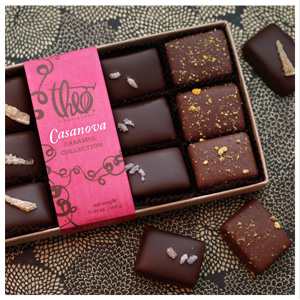

Pair with: This whole set begs to be paired with Pinot Noir or Beaujolais.
Try: Mossback Pinot Noir Russian River Valley 2009 ($19) for its silky texture, notes of chocolate and caramel, and soft tannins. Also, a good bet would be the Chanrion Cote De Brouilly Beaujolais Domaine de La Voute Des Crozes 2009 ($16) with its rich body, floral perfume, and tasting notes of dark chocolate and a tinge of granite that would make the grey salt really pop.
CoCo Luxe Valentine’s Truffles: Champagne, Pure Devotion (pure dark chocolate), and Roses (white chocolate rose and honey ganache inside dark chocolate)

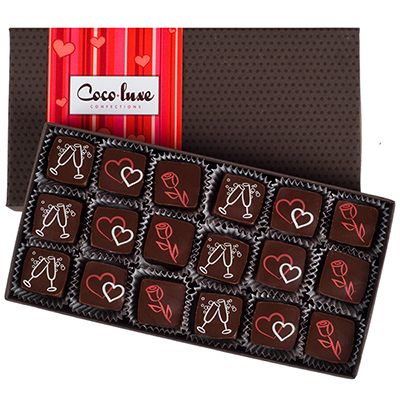

Pairs with: This is a set of truffles that could go well with either a Reisling or a Syrah depending on what flavors you want to bring out. If you choose a Reisling it will bring out the white chocolate and really emphasize the honey flavor of the Roses Truffle. A Syrah would be a better match for the Pure Devotion truffles, emphasizing the fruit and spice of the chocolate.
Try: Seven Hills Reisling Columbia Valley ($12) for its off-dry and on the sweeter side notes of honey and white peach. If you go the Zinfandel route, try Qupe Syrah Central Coast 2007 ($18 and one of my personal favorites) for its rich body, juicy flavors, and bright spice.
Gem Chocolates: 5-piece Sampler with Conquistadores (spicy citrus-flavored habanero chili, a hint of cinnamon in dark chocolate), Cha-Cha (cherry and chili in dark chocolate), Razzle (raspberry and vanilla white chocolate inside ganache), Masala (a blend of Indian spices in milk chocolate), and Praline (ground almonds and caramelized sugar in milk chocolate).

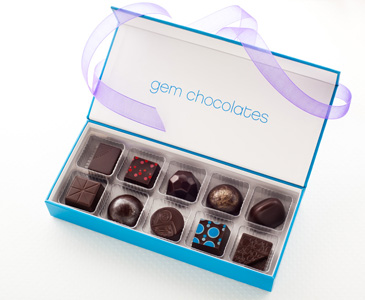
Pairs with: If you’re looking to turn up the heat on all the interesting spices in these chocolates, definitely go with Zinfandel. If, on the other hand, you’re more interested bringing out all those fruity flavors, I’d suggest picking up a bottle of Merlot.
Try: Li Veli Orion Primitivo 2007 ($14) for its spicy nose, flavors of chocolate and cherries, and rich body. For a Merlot, try Robert Keenan Carneros Merlot 2006 ($24 – another one of my personal favorites). With its silky mouth feel, notes of jammy berries and a tinge of cocoa, and subtle spice.
Posted in Varietal Info, What to Drink When..., Wine Reviews | Tagged chocolates, dedicated post, holidays, obligatory post, sad single women, sex happens more frequently when wine is involved, wine and love, wine and sex, wine is love | Leave a Comment »

- Feeling adventurous? Look for wine from one of these 10 unexpectedly good wine regions from around the world [Daily Meal]
- You know all about TetraPaks, dear reader, but how do you feel about wine in a can? [Daily Meal]
- Some helpful Tips on choosing wine by the label [Atlantic Food Channel]
- Proving Thai food is wine-friendly (but hey, you knew that already) [AFC]
- A great article about Torrontes – one of my personal favorite whites [NYT]
- The WSJ stole my scoop on Viognier [WSJ]
Posted in Uncategorized | Leave a Comment »
Growing up there were really only ever two kinds of wine to be found in our kitchen – Beaujolais Nouveau during the holidays and Kendall Jackson Chardonnay (which my mother, whose penchant for abbreviation was far ahead of her time, affectionately referred to as KJ). My childhood memories are peppered with the image of the wine’s label – a singular grape leaf perpetually in the midst of its autumnal color change.
Even as a teenager, I learned early on to avoid pinching the KJ and opted instead for the Kettle One in the freezer, surreptitiously replacing it with water that, whoops, froze after too may refills.
The one night a friend and I snuck off with a bottle of KJ, we only got about halfway through before we both started to feel sick – something I would much later attribute to the wine’s shockingly high sugar content. I couldn’t understand how my mom and her friends could knock the stuff back like juice – we were better off with vodka that we could dilute enough to be tolerable.
Fast forward a few years – my mom and her friends have, thankfully, graduated from KJ (though, I still see a bottle in the fridge every now and then) and have started to drink more and more pinot noir. My mom, who never thought she liked red wine had finally found one that was light enough for her palate and wasn’t of the same family as the monster reds my dad always drank that triggered her killer migraines.
They’ve found some good stand-by pinots that are good to grab for a pot luck or dinner party, but leaving these lovely ladies to their own devices, they’ve still brought plenty of bottles that evoke memories of retching after gulps of KJ. They’ve moved on from the big Chardonnays that came of age with them in the 80’s but with little direction.
My mother aches for a good every-day bottle of Pinot that’s on par with her beloved and not-quite-abandoned KJ, and has asked me to offer some helpful advice on finding the bottle whose image may grace the next chapter of my life’s memories.
Where to Start: Region
As I’ve said before, Pinot is a tricky grape to grow – she’s a diva who is inclined to give a less-than-thrilling performance if not pampered and indulged. Pinot had a sudden surge in popularity (thanks to, I wish I were kidding, the movie Sideways) that left a lot of winemakers, who had no previous experience with the grape, scrambling to cash in on the new market and bottle their own. Needless to say, for a long time, the result of all this inexperience was a lot of cheap Pinot Noir that really didn’t reflect the finesse and poetry for which the wine had been so celebrated in the movie that made it so popular.
This wasn’t, of course, the rule and luckily, in the past couple years, both veteran Pinot producers and some newbie game changers have stepped up their game to bring consumers some really stellar Pinot Noirs that are delicious and placed squarely within the everyday price range.
In particular, producers in California, Oregon, and Chile have some exciting wines that run the gamut of styles and flavors. Generally, finding a region that matches your particular preference for a certain kind of wine (assuming its one that grows in a wide array of places) is a good idea – knowing the basic qualities that come out of specific regions can help you to, time after time, pick the wine that’s right for you.
CALIFORNIA

Sonoma, Sonoma Coast: Sonoma provides the perfect micro-climate for growing Pinot Noir. Pinot noir likes cooler regions and benefits from growing in a region where it is exposed to fog. Growing it in a coastal region known for its thick coastal fog makes perfect sense for Pinot.
What to expect: delicate, light, bright red fruit, floral aromas
What to try: Sebastiani Sonoma Pinot Noir 2008 ($13/bottle), Blackstone Sonoma Coast Pinot Noir 2007 ($10/bottle), Heron Sonoma County Pinot Noir 2009 ($12/bottle), Purisma Canyon Sonoma Coast Pinot Noir 2008 ($14/bottle)
Looking for a splurge? Try Russian River Valley – the most highly regarded appellation within Sonoma County. It’s hard to find anything under $25 a bottle from this region but if you do stumble across anything from this region that’s on sale or otherwise affordable, give it a try!
Try: Willowbrook Sonoma County Pinot Noir 2008 ($20/bottle), Joseph Swan Cuvee de Trois Pinot Noir 2006 ($25/bottle – this is one of my favorites with a tawny color in the glass, really nice nose of strawberries, and a slight earthiness that makes it stand out)
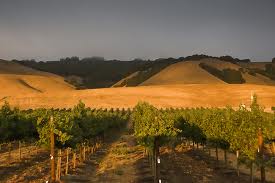 Carneros: Nestled in a valley between Sonoma and Napa, this region acts as a tunnel through which cool air and fog funnel into Napa Valley from the coast, which makes it a good area for Pinot.
What to expect: Because this is a traditionally Chardonnay-growing region, wine producers are keen on oak in this area and love to imbue their Pinots with its smoky and full-bodied characteristics. Look for bigger pinots with medium bodies, creamy red fruit, and a touch of oak, smoke, or spice.
What to try: Castle Rock Winery Pinot Noir Carneros 2008 ($13/bottle), Annabella Pinot Noir Special Selection Carneros 2008 ($13/bottle), La Crema Pinot Noir 2007
Looking for a splurge? Fleur De California Pinot Noir Fleur de Carneros 2007 ($16/bottle), Etude Pinot Noir Carneros 2007 ($18/bottle), Acacia Pinot Noir Carneros 2007 ($20/bottle)

Monterey: Coastal, with cool afternoon sea breezes that keep Pinot nice and chilly.
What to expect: The watch-word for Monterey Pinot Noir is balance. More fruit-forward than upstate Pinots and with a tighter structure to support all that bursting fruit.
What to try: Irony Pinot Noir 2007 ($11/bottle), Poppy Pinot Noir Monterey County 2009 ($12/bottle – and one of my favorites for easy drinking), Estancia Pinot Noir Pinnacles Ranches Monterey 2009 ($12/bottle)
Looking for a splurge? Kali Hart by Talbott Pinot Noir Monterey 2008 ($16/bottle), Chalone Pinot Noir Monterey 2008 ($20/bottle), Summerland Monterey Pinot Noir 2008 ($22/bottle and another personal favorite)
Santa Barbara: Similar to Napa and its various micro-climates, Santa Barbara has a distinct topography that allows for cool ocean breezes and fog to flow through the area’s coastal ranges and makes it one of the coolest places to grow wine vines in California. 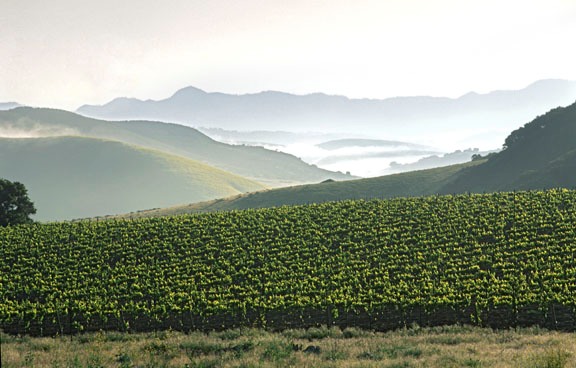
What to expect: Elegant Pinot Noir that defy any previous notion of lightness without substance in Pinot Noir – these are beautiful Pinots that have complex structure that includes a medium body, bright fruit, and a smooth long finish where others just give out at the end.
What to try: Parker Station Santa Barbara Pinot Noir 2007 ($12/bottle), Martin Ray Santa Barbara Pinot Noir 2006 ($12/bottle)
Looking for a splurge?Anything with a Sta. Rita Hills appellation will most likely be dynamite and give you an example of California Pinot at its very best. Melville Pinot Noir Sta. Rita Hills 2009 ($17/bottle) Sanford Sta. Rita Hills Pinot Noir 2007 (half bottle @ $18)
OREGON
Willamette Valley: Cool and moist thanks to its position between the Cascade Mountains to the east and the Pacific Ocean to the west (think of LA smog effect but replace dirty lung-clogging air with fresh cool and wet sea fog).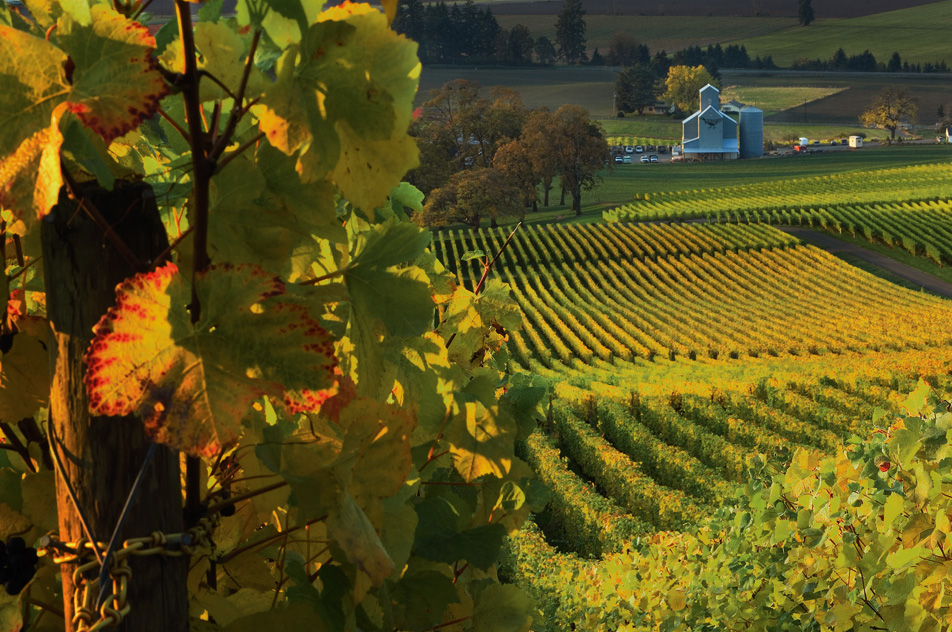
What to expect: Oregon Pinot Noirs tend towards the more Burgundian style in that they can get a little funky and earthy in an amazingly delicious way. They’ll be delicate and lighter in body but still carry flavors of fresh fruits like dried strawberries and blueberries rather than the raspberries and dark cherry flavors of California.
What to try: Spruce Goose Pinot Noir 2006 ($11/bottle), Rascal Pinot Noir 2007 ($12/bottle), Primarius Pinot Noir 2007 ($14/bottle)
Looking for a splurge? Look for “Dundee Hills” – a sub appellation of Willamette Valley that produces stellar Pinots. Try: O’Reilly’s Pinot Noir 2009 ($17/bottle), Belle Pente Willamette Valley Pinot Noir 2008 ($23/bottle), Benton Lane Willamette Valley Pinot Noir 2008 ($22/bottle)
CHILE
($10/bottle), Chilensis Pinot Noir 2008 ($10/bottle), Montes Pinot Noir 2008 ($13/bottle)
Looking for a splurge? Ritual Pinot Noir 2008 ($18/bottle), Montes Alpha Pinot Noir Leyda Valley 2007 ($19/bottle)
Posted in Regional Guide, Varietal Info, Wine Reviews | Tagged Figuring stuff out, Kendall Jacksaon, my mom has horrible taste in wine, Pinot Noir, stealing wine as a teenager, sugar, sweet wine | 1 Comment »

The wine world is one that embraces the esoteric and often shuns the everyday or, god forbid, the ubiquitous. So it’s no surprise that many of the industry’s most formidable palates have shunned unconventional wine packaging from screw tops to tetra paks. Uh-oh, I’m starting to sound like them. I lost you at tetra paks, didn’t I?
If you’ve been near a wine shop in the last ten years you’ve seen screw tops — and with good reason. They’re better than cork at protecting wine from the elements and they eliminate the possibility of opening that prized bottle only to be met with the dank, mildewy smell and musty taste of corked wine (sometimes called cork taint or cork rot).
Wine is a fickle creature and to make wine means to take chances — the slightest adjustment in soil or climate can affect wine from one year to the next in profound ways. With all the chances wine-makers take, screw tops are one step in the process where they can breathe easy; a particular vintage sealed with screw tops will be more consistent from bottle to bottle.
Now let’s talk about tetra paks and wine packaged in boxes. Once respected wine makers started to do away with the cork, the bottle came under scrutiny, too. It’s not surprising — glass bottles aren’t very efficiently recycled and require a lot more energy for production. Not to mention they’re not good for storing wine once they’ve been opened.
Taking these factors into consideration, a ton of French wine-makers have opted to package their wine in tetra paks, a cardboard carton-like container that’s easily recyclable, great for travel, and cheaper. A tetra pak will also store wine better than a bottle after it’s been opened. True, you’re not going to store your boxed wine in the wine cellar and age it for a decade, but for wines you open quickly it’s hard to argue against the tetra pak.
The French are really at the forefront of organic farming in general, and especially in organic wine production. The tetra pak takes that eco-friendly ethos one step further. It looks like an oversized juice-box and is usually used for wines sold in 500 ml or 1-liter volumes as opposed to the 3-Liter bag-in-box approach. Value is also important and plays a role in the decision to package wine in a tetra pak or bag-in-box — packaging costs are reduced by 80% compared to similar costs for traditional bottles and winemakers are able to pass those savings along.
Ready to be impressed by boxed wine? Here are some of my favorite wines that comes in alternative packaging:

Black Box Pinot Grigio ($21.99 for 3-liter box)
This white wine is just what a summer afternoon calls for. The pinot grigio is a light white with bright acidic fruits and a nice sweetness.
Bandit Cabernet Sauvignon ($7.99 for 1-liter tetra pak)
With packaging that evokes a giant juice box, it might be hard to resist sticking a straw in the top and slurping up this ripe fruity wine instead of pouring it into a glass. These wines are made under the producer of Three Thieves wines, which falls under the direction of famed Napa winemaker Joel Gott.
 Y+B Wines Torrontes ($12 for 1-liter tetra pak)
Torrentes is a white-wine grape that has flourished in Argentina. It’s a nice round wine with a fruity apricot nose, fresh notes of pears and peaches, and a refreshingly minerally finish. Y+B wines are all organic, so in addition to tasting good, you can feel a little better about drinking them.
Le Petite Frog Picpoul de Pinet ($25 for 3-liter box)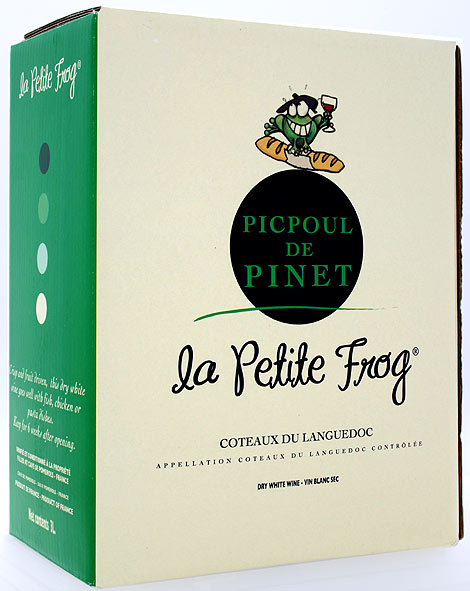
Although the French are at the forefront of organic wine, it’s much harder to get your hands on it all the way out here in California so we were especially excited to find this wine. Picpoul de Pinet is the varietal, a lesser known French white grape that’s gaining popularity with its full body, notes of grass and lemon, and a high acidity that makes it great for pairing with food.
 French Rabbit Merlot ($7 for 1-liter tetra pak)
Another organic wine maker, French Rabbit sources all of its grapes from sustainable farms in the Languedoc region of France. This region is known for its hearty, robust, and rustic wines and the Merlot is a great example of this. Nice spice, ripe cherry notes, and a soft finish make this wine particularly good with BBQ.
Badger Mountain Pure Red, Meritage ($24 for 3-liter box)
A blend of Cabernet Sauvignon, Sirah, and Merlot grown in Washington’s Columbia Valley, this wine is not only organic but a great deal. This is a rich jammy wine with hints of spice and a long rich finish.
 Bota Box Malbec ($16 for 3-liter box)
Malbec is a bigger red wine that’s dryer and more tightly structured than a Cabernet or a Merlot. It’s a wine that can get aggressive and is often used as a blending grape in French wines but can stand on its own in certain wine-making regions. This particular Malbec is softer with ripe fruit and hints of roasted coffee.
CalNaturale Chardonnay ($14 for 1 liter tetra pak)
A lightly toasted oak gives this chardonnay a full mouth-feel. It’s a rich and nutty chard that doesn’t have the tropical fruit flavors that come in a lot of other California versions. This particular wine has a much more French flavor profile of hazelnuts and vanilla.
* Also of note is the website for Octavin Home Wine Bar, which packages wine from small and “artisan” producers in tetra paks.
Posted in Wine Reviews, Wine Trends | Tagged annoying wine world things, boxed wine, eco-friendly, juice box, money saver, snobbery, tetra pak, The French | 2 Comments »

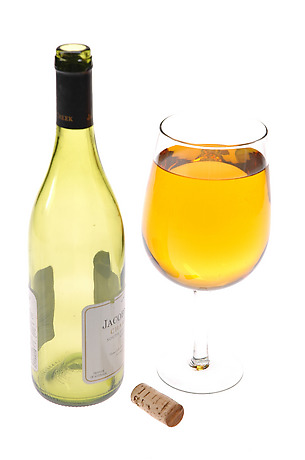
One of the coolest parts about writing about wine is that I get to tell people I write about wine. Regardless of how the preceding conversation has gone, no matter how clumsy or bumbling I may have been, as soon as I mention that I write a wine blog, I get taken just a little bit more seriously.
I’m much more of a wine geek than the sophisticate they may have momentarily imagined dining on caviar and not deigning to drink anything less than Latour.
Honestly? I’ve never had a sip of Chateau Latour (hardly unbelievable given the minimum $1,000 price tag) and I’m not really one for caviar. Oh sure, I probably spend more than most on my day-to-day wine but that’s just because I’d rather imbibe those calories blissfully than guiltily and, well, I am attempting a wine blog…
But as far as food goes (another area in which I am queen of the nerds), I’ll let you in on a dirty little secret: some of my favorite food, for which I have an incessant craving, is best served in a Styrofoam container.
That’s right — I’m talking take-out. So what better way to marry my two great culinary loves than to pair great wine with greasy goodness? You may think it doesn’t make sense to waste good wine on cheap food, but, oh, the pleasures that await you!
I realize that pairing wine with food often presents a daunting task for even the most devoted of oenophiles. It’s hard enough understanding wine all by itself without trying to match it, like a puzzle piece, with its perfect mate — the dish that will enhance the wine and bring out its best flavors while, in turn, being elevated by its alcoholic companion.
My favorite strategy for pairing food with wine comes from Karen MacNeil, author of the celebrated Wine Bible. Macneil suggests that you use wine as a mirror and hold it up against the more pronounced qualities of a dish. Pair spicy with spicy, sweet with sweet, earthy with earthy, and so forth.
If you run into a flavor profile that doesn’t quite have its match in a wine, look to texture — is it rich? You can match it with an equally rich wine and languish in velvety mouth-feels or you can pair it with something bright and full of flavor that will match the intensity of your meal but cut through the richness with some acidity. This is one of the reasons that lobster pairs so well with chardonnay and salmon goes so swimmingly with pinot noir.
For each of my favorite take-out dishes, I’ll go through why I pair each dish with its particular wine and hope to enlighten you through example. Once you’ve successfully paired something as low-brow as Panda Express, there’s no turning back from full-on wine geekdom.
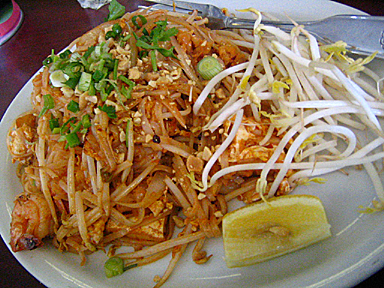

Pad Thai with Tofu: Voignier
Great pad thai is tangy, savory, and a little sweet. The tamarind-based sauce gives it that fruity acidic taste that leaves us hungering for more. Voignier is a grape that is often described as “luscious” and has a characteristic honey aroma. The grape is inherently low in acidity which makes it a perfect match for pad thai, already so tangy, and often has flavors of ripe peaches, tropical fruits (ahem, tamarind), and fresh orange peel.
Try: 2008 K Vintners, $20
Yellow Curry with Shrimp: Grüner Veltliner
Yellow curry is sweet and delicately spiced. It’s the mildest of Thai curries and the most redolent of coconut milk. The complex and delicate broth requires a wine that accents the spice without overpowering. Grüner Veltliner is an Austrian white grape that yields a sweet wine that is noted for the characteristic rush of white pepper on the finish. The combination of sweet and spicy makes it an ideal match for Thai curries.
Try: 2008 Hiedler, $16
Pad Kee Mao with Chicken: Savignon Blanc
Aka “drunken noodles,” this dish is one of my personal favorites among Thai cuisine. You get spice from the chilies, an herby fresh flavor from the mounds of Thai basil that the noodles are tossed with at the very end, and the grassy flavor that comes from bell peppers only cooked slightly. Sauvignon Blanc, especially from New Zealand, with its bright acidity and grassy herbaceous notes is a perfect match for this bold noodle dish.
Try: 2008 Jules Taylor, $15
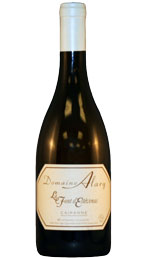
Chicken Tikka Masala: Côtes du Rhône
The dish is rich, creamy, sweet, and redolent of spices without being spicy. The wine has a good deal of sweetness and spice as well — with a rich, smooth mouth feel that complements the creaminess of the sauce.
Try: 2008 Domaine Alary, $16
Lamb Vindaloo: Dolcetto d’Alba
Another tamarind-based spicy dish, but this time with gamey lamb and heavy heat, this dish calls for something with a lot of fruit, good spice, and a brightness to match the tang of the tamarind. Dolcetto is one of my favorite grapes — I’m tempted to describe it as the Beaujolais of Italy. It’s a lighter wine with nice acidity, lots of fruit like raspberries and cherries, and a spicy finish.
Try: 2006 Moccagatta, $16
Sweet and Sour Chicken: Albarino
Ah, the old standby. Sweet and fruity one minute and pungent the next, this is a great opportunity to get creative. Albarino has a zing to it that makes me love it for sweet and sour chicken — it also has a tendency toward sweetness and an almost unbearable lightness that lets it shimmer on your tongue instead of weigh down your taste buds.
Try: 2006 Morgadio, $13


Beef with Broccoli: Bordeaux
This traditional favorite is salty soy-goodness at its best. The good kind will also have a nice ginger and garlic flavor that is well matched by this rich red wine. The wine has notes of ginger, very soft tannins, and a velvety mouth feel that makes it easy to drink.
Try: 2005 Chateau Guiraud-Cheval-Blanc, $14
Moo Shu Pork: Priorat
Priorat is the name of the region in Spain that makes robust and earthy red wines that go well with Moo Shu Pork. Look for a blend that features syrah as the dominant blending grape — it will lend a gamey, almost funky ,quality to the wine that will accentuate the woodsy mushrooms in this dish.
Try: 2007 Joan D’Anguera La Planella, $19
Posted in What to Drink When..., Wine Reviews | Tagged chinese food, Panda Express, self indulgent, Sometimes I'm an Idiot, take out, thai food, wine pairings | 2 Comments »
Pinot Noir is a tricky little grape – and to write about the wine, I’d need to have an entire blog solely devoted to it. Pinot Noir is one of those wines that attracts uneasy wine drinkers and connoiseurs alike. For the former it’s a “lighter” red wine that is infinitely more drinkable than a challenging glass of Cabernet or Syrah and for the latter, a good glass of Pinot can be a revelation. However, this blog is for the former, and after so many glasses of Pinot Noir, enough is enough.
Its true that Pinot falls on the lighter end of the spectrum. That’s not to say that it doesn’t have complexity and character – it wouldn’t be one of the most sought-after wines in the world if it didn’t have both of those qualities. Pinot Noirs come in as many styles as there are places it is grown – from California to South Africa and lots of unexpected places in between. Pinot Noir can be a fruit bomb in a glass – an explosion of ripe red fruit that will knock you off your bar stool. It can be delicately floral or funky with hints of mushrooms and earth on the nose. A bad glass of Pinot is either syrupy sweet or so light it goes down like water with just as much of a finish.
All that having been aired out, if you find yourself confronting the fact that maybe just maybe you don’t actually love Pinot Noir as much as you think you’re supposed to the good news is that you have options. There are plenty of wines out there that are still “lighter wines” and easy to drink without all the politics behind Pinot Noir.
Mencia: Spanish
Grown mostly in the northern region of Spain known as “green Spain”, this is a semi-obscure grape that makes a truly delightful little red wine. It’s similar to some Pinot Noir’s in its flavor profile of rich red fruits and nice acidity. These wines, like the best Pinots also have a nice long finish that’s easy-going and smooth.
Try: Benaza Mencia 2009 at $9 a bottle at The Wine Buyer
Plavac: Croatia
Plavac is an ancient grape that is grown widely in Croatia and is rumored to be a distant cousin of the Zinfandel grape. Plavac is a grape that can pack some nice spice and tight structure that holds up a bouquet of strawberries and raspberries. It’s got more grip than your average Pinot but its still firmly in the lighter column. Not to mention its from Croatia which gives it a little bit of that Eastern European romance and intrigue…
Try: Dingac Plavac 2007 at $13 a bottle at Plonk
Dolcetto : Italian
Ah, Dolcetto. This was one of the first wines that I ever drank and thought was simply delicious. It’s the table wine of Piedmont, one of Italy’s most revered wine making regions that also produces Barolo and Barbera. Although the name implies sweetness, Dolcetto is a light and spicy little grape with ripe fruit, silky tannins, Moand a juicy quality that makes it especially amenable to accompanying a meal.
Try: Cascina Degli Ulivi Monferrato Dolcetto “Nibio” 2006 at Astor Wines
* Also, see my post on Beaujolais!
Posted in Varietal Info, Wine Reviews | Tagged Beaujolais, Croatian wine, Dolcetto, my favorite wines, Pinot Noir, Spanish Wine | Leave a Comment »


I’m young, broke, and in love with wine. The same was true a little more than a year ago when I was studying abroad in gloomy Edinburgh. The pervasive gray underfoot and overhead was threatening to turn me into a chain-smoking, sun-starved zombie, so I planned a three-week jaunt across the continent. I had a good friend studying in Paris at the time, so we joined forces and ventured into the French countryside, searching for sunnier pastures — and vineyards.
Rendered practically destitute by the weakness of the dollar against the Euro, we nixed the pricey train to Bordeaux and set out in a rental car for famed Burgundy. With nothing more than some faded Mapquest print-outs to guide us, we ended up in a small town in the northwestern corner of the Beaujolais region. See also: not Burgundy.


I’d been looking forward to drinking good wine and the general opinion of Beaujolais is that it is a simple wine; the table wine of Parisian bistros — light, fruity, and easy to drink. My only encounters with the variety came from a Christmas tradition: my mother, who drank nothing but cheap California Chardonnays, bought a bottle of Beaujolais Nouveau every year around the holidays.
Although we were disappointed, we’d spent most of the day getting hopelessly lost so we called it a day and hung up our hats. The countryside was breathtaking, our B&B came with chickens, donkeys, a claw-footed tub in our gorgeous room, and the little town was effortlessly charming. I doubted I’d find anything revelatory in our travels but I was relieved on behalf of my friend, a white-wine purist so, Beaujolais, I figured, might actually be a good compromise.
After the first sip it became clear that my disappointment had been uncalled-for. Delicate, floral, tightly structured, and redolent of fresh raspberries and strawberries, this was some delicious wine. At tasting after tasting, wild roses, violets, and peonies perfumed my glass while the wine’s acid woke up my tongue and, for the first time, I tasted the pleasant tang of granite. Light but velvety, the wine had none of that sticky, saccharine aftertaste I’d come to expect from Beaujolais Nouveau.
Beaujolais is the name of the region, but the wine is actually made from a grape called Gamay. The Gamay grape is not a diva; it’s relatively easy to grow, rigorous, and versatile. Her flavor is delicate but not often considered as elegant as her cousin, Pinot Noir. It’s naturally high in acidity and low in tannins; although it may dance on the tongue, it won’t cloy.
The region itself is large and can be easily split along the North/South divide by soil type (rocky and dry in the North and richer clay in the South). The southern parts produce wines that fall under the appellation of plain-and-basic Beaujolais and are generally lighter and fruiter — this is where the grapes that go into Beaujolais Nouveau are grown.
The Northern half produces wine under two different appellations: Beaujolais Villages and Cru Beaujolais. The former is usually of higher quality than plain Beaujolais, but not as highly regarded as the latter. Cru Beaujolais are broken down even further into ten specific appellations, each representing a distinct area and usually named after a nearby town. From North to South these appellations are: Julienas, Saint-Amour, Chenas, Moulin a Vent, Fleurie, Chiroubles, Morgon, Regnie, Cote de Brouilly, and Brouilly.

We were lucky enough to stumble right into the heart of this Northern region, so we were tasting the best that Beaujolais has to offer. Just like people, grape vines reflect the way they were brought up; the Gamay vines that are grown on the rocky and acidic soil of these northern areas have to struggle a little more to produce fruit. That struggle is reflected in the fruit and manifests itself as a more complex and structured wine.


Beaujolais is an excellent starter wine; it’s not intimidating, not meant for aging, and you can find a great bottle for a wonderful price. If you’re mostly a white drinker, it’s a nice red to ease you into the heavier stuff. More experienced drinkers will appreciate the subtleties of this delicate wine – it’s a pleasant surprise in such a “light” wine.
By the end of our trip, we were both loyal Beaujolais drinkers. My friend swore off the whites and began diving into deeper, heavier profiles. For my part, I finally found something to take the edge off that gloomy Scottish fog.

Try These:
Fleurie is commonly referred to as the most feminine of the Cru Beaujolais; with the most floral nose, often of violets, ripe red fruit, and a velvety finish (Chateau des Deduits Fleurie Beaujolais 2006 $16.95, Terres Dorees Fleurie 2008 $18.99)
Morgon wines are the darkest and richest of the Cru Beaujolais and are most similar to Burgundian wines; a peachy nose, earthy taste, and silky texture (Maison Louis Tete Morgon 2007 $14.99, Domaine Georges Descombes Morgon 2007 $19.99)
Cote De Brouilly is somewhere in between — not as earthy as Morgon wines but richer than a typical Fleurie (my personal favorite is the smoky 2006 Chateau de Thivin at $14.00 but also good is the more lively 2008 from the same winemakers at $18.00 and Daniel Bouland’s 2008 at $20).
Posted in Regional Guide, Varietal Info, Wine Reviews | 5 Comments »
What You’ll Find on Forget Burgundy
-
Lately
Something Specific?
Poke Around
Tasting Notes
Tweets by forgetburgundyRSS
-

 Forget Burgundy
