Feeds:
Posts
Comments

The other night I attended a lovely event hosted by Sonoma Cutrer. The evening started with a discussion, moderated by one of my idols, Barbara Fairchild. The panel included Chef Michael Lamonoco, who owns Porter House New York, where yours truly worked as a hostess for about 4 months when I first moved and when I still thought that I was the exception to the “magazines aren’t hiring” rule.

Also on the panel was famed Chef Charlie Palmer, cookbook author and writer Dede Wilson, longtime food journalist and critic Ray Sokolov, and Mick Shroeter, winemaker for Sonoma Cutrer.

The prospect of being in the same room with, let alone possibly meeting Barbara Fairchild had me shaking in my boots just enough to zap my appetite for the day. The wine served was a California Chardonnay that was zippy and fruity rather than oaky and buttery. The discussion was centered on the idea of American food trends, so naturally, Barbara asked about the biggest trends of the last 30 years had been.

No matter how many different ways they tried to say it, the answer from everyone on the panel was the same: fresh seasonal and local ingredients. There were jokes about how frozen Dover sole was once an innovation, and about how restaurant patrons back in the day didn’t know the difference between a freshly caught diver scallop and one chiseled out of a frozen bag. The biggest shift, agreed on by all present, was that fresh and quality ingredients had become available, in demand, and had changed the way that everyone was cooking.

The follow up question was, of course, to name three chefs who made a difference in food trends of the last 30 years. Chef Lamonoco went first and mentioned Wolfgang Puck, Charlie Palmer, and the French chef  (my French is nonexistent…) who brought contemporary French haute cuisine to NYC. All of these, I thought, were noble choices and all of the parties mentioned certainly did make a significant contribution to modern American food.

However, after all of the other members of the panel went on and discussed their choices, the feminist in me couldn’t resist screaming inside my head:

YOU ALL JUST SPENT 15 MINUTES TALKING ABOUT LOCAL SEASONAL AND QUALITY INGREDIENTS AS A HUGE CULINARY TREND AND NO ONE MENTIONED ALICE WATERS?! ARE YOU KIDDING ME?!

(By the way, she had spent that morning with Michelle Obama – you know, the president’s wife? No big deal.)

While the feminist in me can be hot headed,  she also has a point.

To be honest, it should not have been surprising. At the end of the day, though women have made huge contributions to the culinary industry, its still a world predominantly run by men. That’s not to say that women have not been successful – especially outside of New York.

When I think about Los Angeles, where I grew up, and the culinary scene out there, I think about women who have built veritable culinary empires like Nancy Silverton, Susan Fenniger, Suzanne Goin, Zoe Nathan,  and Candace Nelson.  Even the food critic for the LA Times is a woman (though S. Irene Virbilla is hard-up for fans these days) – hell, Ruth Reichl got her start as the LAT critic and Barbara Fairchild ran Bon Appetit from the west coast!

In the spirit of giving credit where credit is due, I’ve rounded up some  California wine makers that make great wine and happen to have breasts, too.

Heidi Peterson Barrett: Winemaker at Screaming Eagle & La Sirena Winery (her own label) via CalWineries.com:

“In 1992, Barrett went to work for Screaming Eagle. Screaming Eagle is one of those wines that everyone has heard of, but not many have tasted. It is an emblematic California wine, perhaps the California wine of the last few decades. And once again, it was Barrett’s exquisite blend of art and science that made this wine a reality.

Her first vintage, the 1992, also received a 100 point score from Parker. (Two in one year!) At the 2000 Napa Valley Wine Auction, a 6 liter bottle of this wine was purchased for $500,000; the most expensive single bottle of wine ever sold.”
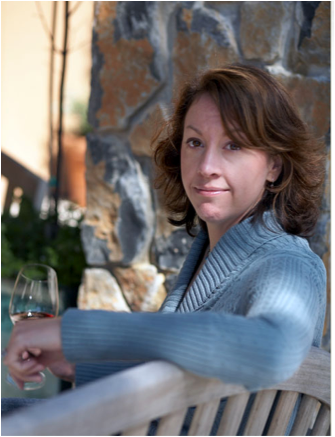
Sally Johnson:  Winemaker at Pride Mountain Vineyards. Pride Mountain Winery is located on Spring Mountain, one of my favorite areas of Napa. I’m not alone, here, and Johnson managed to make one of Wine Spectator’s top 100 wines of 2010.

Laura Zahtila is the owner of Laura Zahtila Vineyards in Napa Valley. Laura is the owner and winemaker and they make teensy tiny amounts of amazing wine.
Anne Vawter: Winemaker at Oakville Ranch Vineyards. Vawter worked under Heidi Peterson Barret at Paradigm, one of the most prestigious winemakers in Oakville before moving on. Oakville Ranch Vineyards was the first in the area and has always been known for being the best so Vawter’s position is an important one.

Helen Turley: Winemaker at Martinelli, Marcassin, and Turley Wine Cellars.

Via thelifestyleloft.com:

“A name that has become synonymous with truly great California wines is Helen Turley, one of the most sought-after winemakers in the world. […] Now Turley’s efforts are so revered that she recently graced the cover of Wine Spectator beside the suggested title “America’s Greatest Winemaker?” 

Ladies and gentleman, I have been on a roll this week. I suspect that my brush with zombie-ism that was last week and my reintroduction to the wonders of caffeine are at least partially responsible but this week, I just feel great.

I have done such things as craft two haikus (go ahead, you try it before you roll your eyes at me), come up with an entire wine related rhyme, and made a gigantic leap in the direction of saving myself a giant mound of money by learning to make Chinese food at home. BAM.

So how did I feel when my dear cousin brought up the topic of wine spritzers? Did I slump into my chair and groan? Did I laugh? Did I cower? No, dear readers, I said bring it.

Spritzers are generally something I relegate to the realm of white zinfandel and commercials for Arbor Mist. However, I have a feeling that wine-centric cocktails are boomeranging back from 90’s obsolescence and I’m always happy to be ahead of the game.

Spritzer’s are generally nothing more than white wine and seltzer with, perhaps, a stray strawberry or raspberry thrown in for decoration. However, after a wee bit o googling, there’s also a healthy contingent of spritzer spikers out there who recommend a splash of peach schnapps or other such fruity liquors. To that end, this whole spritzer thing is starting to sound like a vaguely good idea.

So, what wine would I use? I would say that, since you’re going to be mixing it with seltzer you want to use a white wine that is already pretty light but that has plenty of fruit in it. Also, since you’re going to be watering it down, I would think that you wouldn’t want to spend more than $10. Give these a whirl:

• Torrontes: A distinct nose of peaches and apricots that would get a nice bump from a splash of Schnapps. The high acid, full body, and crisp finish are perfect for a spritzer.

•Albariño: A super super light and snappy white wine that usually has notes of watermelon and roses. Throwing in some Saint Germain Liqour along with your seltzer of choice couldn’t hurt.

Vinho Verde: Bargain-basement prices and a unique fresh lime zest quality makes this ideal for a spritzer, especially if you wanted to throw in a dash of vodka or perhaps even some clear tequila or a splash of chartreuse?

Last night I had the pleasure of attending the Brooklyn Uncorked event hosted by Edible Manhattan. I was especially excited because the theme of the evening was New York wines. A few weeks ago I was supposed to go to the North Fork for a weekend of tasting with a couple of GF’s but inclement weather kept us city-bound and dry.

The event was held at the gorgeous Brooklyn Academy of Music and, without further ado, lets get to it.

The men of New York love pink. I know I shouldn’t have been surprised to see so many dudes swilling Rosé at a New York wine event (Rosé’s from Long Island were among the first NY wines deemed drinkable by the wine world at large), but I was bemused by the confidence with which so many guys stepped up and demanded a taste of the pink stuff.

“Half and Half” is not just a dairy product. A lot of the wine makers were pouring Chardonnays that they were calling “half oaked”. These wines were half chardonnay that had been fermented in oak and half chardonnay that had been fermented in steel tanks. I can’t say that any of them were my favorite – they all tasted a little half baked but the concept was new and interesting.

I didn’t see a single screw top. This struck me as really interesting especially because most of the wines last night were definitely being marketed as wallet-friendly and screw tops are an easy way to pass savings along to consumers. Perhaps this young wine industry is afraid of being construed as cheap and have stuck to cork in an attempt to seem old-school? Too bad I had at least one glass that came from a corked bottle last night…

Gimmicks abounded. My favorite had to have been the wine called “Anomaly” that was being poured as a “white Pinot Noir”. Basically it was an non-sparkling Champagne (if the juice of Pinot Noir grapes is separated from the skins early on it will retain a white color – its only through prolonged contact with the skins that wines become red). Also, you’d think that in a post “white Zinfandel” world, you’d want to avoid calling your wine a “white Pinot Noir” or a “White Merlot”. Alas….

One winery, called Channing Daughters, was serving a Friuliano – a fairly obscure wine made from the grape of the same name that hails from Northern Italy. It was a brave move and the wine was pretty good – also, their Rosé was one of my favorites.

A quick note on the food: don’t serve giant fried batter-coated balls of fish-and-things-on-a-stick if you don’t want a lawsuit from someone who loses their sense of taste from trying to eat one. Cold pork belly does not taste good even if you serve it on a buttermilk biscuit. Minus any bonus points that would have been gained from the biscuit if the biscuit is hard. Do not pronounce “pistachios” as “pis-tass-ee-ohs” – you’re already serving Pâté, do you really have to convince us that you’re fancy? Lastly, although I feel bad that you’re standing behind a table of food that no one has touched all night, you’re the one that decided to serve liverwurst mousse.

• Finally, although I was really pulling for Long Island on this one, a lot of the wine from this region still has a long way to go. There was a lot of green wine (in the bad way), a lot of wine that was just too tight, and a lot of bitter aftertastes. Sadly, I found myself grimacing post-swig a little too often throughout the night. The exceptions were some really nice sparkling wines (my favorite was Sparkling Pointe’s Blanc de Blanc), some delicious Rosés, a delightfully smooth Cabernet Franc from a winemaker called Osprey’s Dominion Vineyards, and the Channing Daughters’ Friulano.


Hey (wine) lovers,

Make sure you all head on over to Refinery 29 for an awesome round up of 10 great wines under $15 that I put together! Refinery 29 is one of my absolute favorite fashion/shopping blogs and collaborating with them was fabulous!

Here’s the link: 10 Great Bottles in NYC


As New Yorkers, we hardly balk at a Subway car that already looks horrifyingly packed, a gallery filled with art that is annoyingly pretentious, or a shop hung with $2000 t-shirts. Walking into a wine shop, however, complete with the smell of cork and old wood and a curmudgeonly proprietor can inspire hesitation and mild anxiety in even the most jaded.

Why?

I think I may have gleaned some insight into the matter this past weekend. I spent a hefty portion of my Saturday on the phone to various wine shops all over the city in pursuit of a piece I was writing. One of the things that really struck me in my dealings over the phone that day was how rude some of the people I spoke to were.

My first encounter of the unpleasant kind happened on my very first call. I shouldn’t even have to get into the annoyances frequently caused by the of trifecta of ATT, an iPhone, and New York City. When I dialed the first time, my side of the call didn’t even connect and I was met with the dreaded triple-beep that signifies a dropped call. So, undeterred, I called again.

This time, the call went through and I was met with an irritated voice barking at me, “So, you gonna hang up on me again?”

“Excuse me?”
“Yeah, you just called and hung up on me.”

“Oh, well, I don’t think that was me.”

“Yes, it was. You’re on my caller ID.”

“Erm…sorry, the call didn’t even go through on my end.”

“Well, I answered and there was no one there. What do you want?”

“Oh, um, well. Sorry. Anyways….”

When the shop owner didn’t have what I was looking for, he was so grouchy and that I decided I’d rather not continue talking to him. Instead, I thanked him, hung up, and sat there shaking my head for a moment.

But I kept on keeping on. The next few people I spoke to were nice enough and helpful, too. Then I called a wine shop in Long Island City.

“Hello?”

“Hi, can you tell me if you carry any Mencia?”
“Yes. We have a bottle for $25.99.”

“Oh, I’m actually working on a story and I’m looking for bottles at $15 and under.”

“We don’t have any cheap ones. With all due respect have you been to our shop before?”

Lets just leave it at that – he insisted on continuing to recommend bottles that were out of my price range, put down any suggestion I made and “with all due respect” derided the choices I’d already made.

Because this is not a blog about poor customer service, I’m not going to dwell on either of these little encounters. Needless to say, however, the behavior struck me as just the kind of snobbery that puts a lot of would-be-wine-lovers off.

It is especially fascinating to me because, as the BF pointed out, the esoteric and haute-cuisine side of the food world has really ingratiated itself to the public. For a while it was eager foodies clamoring at the gates of the food world, using whatever means necessary to gain access but now, it really seems that in many quarters, the tables have turned.

Why, then, has wine, food’s most stalwart and time-tested companion, not caught up? And for all of those foodies obsessed with molecular gastronomy and obscure local ingredients, why doesn’t wine with all of its quirks have the same allure? Why, does it seem that the wine world is the last bastion of the kind of old school snobbery that doesn’t want to make you join the club but shrink from it?
Don’t get me wrong, there are people in the wine world who are eager to overturn this trend – from consumer-friendly wine shops like Best Cellars to the people behind PBS’ new show, Vine Talk. However, in this case, it’s definitely the wine world reaching out, unsolicited, to would-be winos rather than a response to an infatuated public.

I’m on the hunt for an answer and I’d love to hear what you guys think!

Spring Fling

Whenever Spring goes a-sprunging I can’t help but to think of my 10th grade English teacher, the indefatigable Mrs. Coombs. Nothing but a big lovebug at the end of the day, the woman was constantly trying to convince us that she was a crusty old curmudgeon by saying things like, “I hate the Spring. All of my students fall in love in the springtime and it’s impossible to get anyone to pay attention to anything.” Of course, it couldn’t have helped her case that she also tried to get a bunch of 16-year-olds to read all 700 pages of Richard III (or whichever one the humpback was) at about the same time.

Anyways, now that lots of green things have finally started bursting forth from tree branches (leaves, if I recall correctly?) and the tulips are blooming, I have to admit I find myself feeling more than a little flirtatious. I’ve stashed my winter coat in the furthest corner of my tiny closet never to be seen or worn again and hung six or seven dresses (yeah, it’s that puffy) and – dare I let my optimism overtake me – a pair of shorts in its place.

So while I may not be flirting with boys (save for one peculiar specimen who likes to dress up in tuxedos, owns a blue fuzzy puppet, and has a propensity for wearing bathing suits to work), I’ve most certainly been flirting with white wines. Usually I’m a pretty stubborn red wine drinker – there’s something about white wine that can just seem too girly for me. But come those first few weeks of springtime, when all I want to do is pick flowers and dance around like a Disney princess, absconding with cartoon bluebirds and wearing heels for no reason on a Sunday, it seems like white wine is perfectly appropriate.

Fresh, zippy, floral and bright are the notes that set my heart all a flutter of late. Though there was that day last week when it was out-of-the-blue 85 degrees and humid and I walked into a Best Cellars and told the guy I wanted a wine that tasted like I was “licking granite”. The phrase, “I want stones in my mouth” may also have been uttered but we’re looking through the tapes to make sure on that one.

Below you’ll find a list of the wine’s I’m currently flirting with, though who knows what love affair could blossom by next week?

Val d’Aosta: A tiny region in northern Italy (north of Piedmont) that is close to the Swiss border, this is a high-altitude growing region. The wines that come out of Val d’Aosta express their terroir with delicate flavors and often bracing acidity. The whites that come out of this region are crisp and floral and taste like melting snow.

Chenin Blanc (Vouvrey): A slick of granite on the tongue, this is just the kind of wine you want on a hot day. It can be sweet and juicy on the finish, but never loses its minerally tang. 

Albarino: This is a super super light white wine from Spain. It’s got a tell-tale nose of peaches and apricots, but gives way to a wine that is shimmering and, dare I say, ephemeral.

Godello: A Spanish white varietal grown in the same region (Galicia) as Albarino yet much less known and harder to find. It’s got the same lightness to it but softly zings with flavors of lemon and wildflowers.

Gruner Veltliner: Gruner is one of those wines that comes in a few different styles. I like mine dry with a richly perfumed nose of roses, floral notes, and exotic tropicals like lychee and passion fruit.

PS. On a side note, Matthew Kaner, owner of one of my favorite LA wine bars, (Covell in Silverlake), winemaker, musician and all around renaissance-man has an album coming out in July with his band, Liquid Love Letter. You can stream some tracks here. I suggest pairing the tracks with a bottle of Santa Barbara Pinot Noir – not only is SB Kaner’s hometown, but these delicious wines echo the softspoken sumptiousness of LLL’s tunage.

Today’s wine story in the NYTimes Dining & Wine  Section is all about the underrated magic and allure of some of my absolute favorite wine – Cru Beaujolais. Their favorite pick is also one of my absolute favorite picksChateau Thivin’s Cote de Brouilly @ about $23/bottle.

A town in Beaujolais

While Beaujolais is especially fantastic for summertime (a chill can make its flavors really sing), it’s a wine that I like to drink year-round for its delicacy, undeniable femininity and bright flavors. It’s a wine that for a very long time had a marred reputation – brought on by the copious production of bad Beaujolais Nouveau and drinker’s of Cru Beaujolais were chided for poor taste by those who didn’t know any better.

At the end of the day, however, I’ve always loved these wines because they’re so delicious it’s easy to gulp them down without stopping to consider all the subtleties that are lingering below the surface. Always the English Major, I like to think of Cru Beaujolais as a great book – something classic that everyone has to read in high school and inevitably ends up in the favorite books column on Facebook.

Beaujolais Tasting in 2009 at Georges Dubouef

So, here’s what the NYTimes had to say about Cru Beaujolais

AND

Here’s what I wrote about it way back in June of 2010 (originally published on Poor Taste)

Suck it, NYTimes.

Wine can be just as seductive as a beautiful woman. Long legs, intoxicating perfume, and an intriguing reluctance to open up are all qualities that could be ascribed both to a femme fatal and to a great wine. Not to mention that too much of either (or both) has been the downfall of many great men.

And just like with a beautiful woman, it’s best, with wine, not to rush into things – to take the time to appreciate all of its attributes and pay homage to each one in turn. Whenever you see someone swirling their wine, inspecting the sides of their glass, and sticking their nose into it, what you’re seeing is the equivalent of foreplay for serious wine drinkers.

So, knowing just how important it is (if you don’t you probably have something dangling between your legs and need to go buy as many back issues of Cosmo as you can get your hands on and perhaps peruse the sex books section on Amazon), I’ve provided you all with a nifty little guide to the essential moves and know-how to getting the best performance from the next glass of wine you get involved with.

The Swirl

The move: Place two fingers on the base of the glass, one on each side of the stem and, without lifting the glass from whatever surface its resting on, start to swirl the glass in a counter clockwise motion. You want to achieve a motion that causes the wine to rise up and wash the sides of the glass. You don’t have to do this for very long – a couple seconds should do the trick.

The point:
For a long time it was thought that the Swirl helped encourage a wine to “open up” by getting air into it. However, the Swirl, it turns out, is pretty inefficient towards this goal – a wine will open up better with time or a decanter than with a few spins around the wine glass.

While the Swirl doesn’t do much to open up a wine’s flavors, it does prove rather effective in amping up a wine’s scent. For wines like Pinot Noir, Viognier and Riesling (to name a few) getting a good swirl is essential and by coating the sides of the glass, the wine gets closer to one’s nose and enables more subtle scents to be detected.


Legs Inspection


The move: Holding a wine up to the light post-Swirl in order to watch the wine on the sides of the glass drip back down into itself, leaving thin trails of wine that are called “legs” or “tears”

The point: As it turns out, legs are just another long-standing and wrong supposition. A wine with “good legs” or “long legs” was once thought to be an indicator of a wine’s high quality and also to indicate the levels of sugar present in a wine. As it turns out however, legs are just a visible side effect of the evaporation of alcohol – the higher the alcohol the thicker the legs. So, I guess if you’re at a blind tasting and you only have a few tastes and you’re and looking to get hammered, this trick will come in handy. Otherwise, they’re just kinda pretty.

The Sniff:

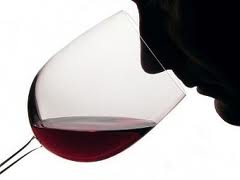
The move: You can tell just how serious someone is about wine by how far they stick their nose into a wine glass. To get all the benefits of the sniff, you want to swirl    your wine and tilt the glass towards your nose, to get the wine as close as possible to your nostrils. Then go ahead and inhale deeply and take the wine away from your nose as you exhale.


The point: The reticent who only venture to sniff the air at the top of their wine glass are missing out on all the pleasures afforded by a good deep sniff. Half of taste is smell and sometimes half the pleasure of a glass of wine is its perfume. The nose of a wine can be just as essential to its enjoyment as its taste. Smell is an intensely personal sense and powerful in its ability to trigger memories – similarly, sometime’s a wine scent is much more revealing about its past than its taste can be.

Vine Talk Premier!!!

Hi everyone! Soo last night Vine Talk premiered on the PBS station here in NYC and the website finally launched, too! Head over to the blog section to see all the hard work I’ve been doing for this fantastic and super fun project…you can check the website for the show’s listings in your city (public television is very strange and the show has different days/times according to city – yeesh).

The first episode was all about Napa Cabernet Sauvignon and featured guests Nora Ephron (whom I have a very bratty and beautiful wiener dog after – my Nora also loves food and is tremendously fat), John Lithgow, Chef Jonathan Waxman, and S. Epatha Merkerson of Law & Order fame (and who, coincidentally lived in my humble little apartment on the UWS before she hit it big). The hosts are Ray Isle of Food & Wine Magazine and the inimitable Stanley Tucci.

Make sure you stay tuned to both the show and the blog!!!

Wine on the Web

I spent all of yesterday writhing in bed with a fever I couldn’t quell with Tylenol until I’d  filled my stomach up with enough Saltines and crying out to my roommate that I must have been the victim of biological warfare or cancer.

Otherwise I’ve been busy with other projects that have stolen my free time and creative energy away from my beloved little blog. Exciting things are happening, though, guys, and I can’t wait until I can share them with you! Soon! In the meantime, I’ve rounded up the most interesting wine stories from around the web over the past couple of weeks….it’s been a bit of a slow news cycle in the wine world. Maybe this 24-hours-at-death’s-door thing is going around?

  • According to Snooth, there are 7 steps to full-blown wine geekdom. The slide show is fun and totally illuminating – take a look and let me know which step you’re in! [Snooth]
  • WSJ does a closeup on Japanese wine, mostly made from the Koshu grape. NYT did a similar piece back in the fall that focused on the ways in which the grape has been reviled for much of its history.
  • OK, so a couple weeks ago the scandal of the wine world revolved around tricking a snobby sommelier. This week, the controversy lies in whether wine pairings are straight up bullsh*t or whether there is magic in finding a wine’s perfect match. It’s NYTimes vs. HuffPo. Whaddayathink?
  • This wasn’t really a wine piece, but its a really great article about American’s fickle trend-chasing nature when it comes to food and can totally be applied to wine, as well! [NYTimes]