
The wine world is one that embraces the esoteric and often shuns the everyday or, god forbid, the ubiquitous. So it’s no surprise that many of the industry’s most formidable palates have shunned unconventional wine packaging from screw tops to tetra paks. Uh-oh, I’m starting to sound like them. I lost you at tetra paks, didn’t I?
If you’ve been near a wine shop in the last ten years you’ve seen screw tops — and with good reason. They’re better than cork at protecting wine from the elements and they eliminate the possibility of opening that prized bottle only to be met with the dank, mildewy smell and musty taste of corked wine (sometimes called cork taint or cork rot).
Wine is a fickle creature and to make wine means to take chances — the slightest adjustment in soil or climate can affect wine from one year to the next in profound ways. With all the chances wine-makers take, screw tops are one step in the process where they can breathe easy; a particular vintage sealed with screw tops will be more consistent from bottle to bottle.
Now let’s talk about tetra paks and wine packaged in boxes. Once respected wine makers started to do away with the cork, the bottle came under scrutiny, too. It’s not surprising — glass bottles aren’t very efficiently recycled and require a lot more energy for production. Not to mention they’re not good for storing wine once they’ve been opened.
Taking these factors into consideration, a ton of French wine-makers have opted to package their wine in tetra paks, a cardboard carton-like container that’s easily recyclable, great for travel, and cheaper. A tetra pak will also store wine better than a bottle after it’s been opened. True, you’re not going to store your boxed wine in the wine cellar and age it for a decade, but for wines you open quickly it’s hard to argue against the tetra pak.
The French are really at the forefront of organic farming in general, and especially in organic wine production. The tetra pak takes that eco-friendly ethos one step further. It looks like an oversized juice-box and is usually used for wines sold in 500 ml or 1-liter volumes as opposed to the 3-Liter bag-in-box approach. Value is also important and plays a role in the decision to package wine in a tetra pak or bag-in-box — packaging costs are reduced by 80% compared to similar costs for traditional bottles and winemakers are able to pass those savings along.
Ready to be impressed by boxed wine? Here are some of my favorite wines that comes in alternative packaging:

Black Box Pinot Grigio ($21.99 for 3-liter box)
This white wine is just what a summer afternoon calls for. The pinot grigio is a light white with bright acidic fruits and a nice sweetness.
Bandit Cabernet Sauvignon ($7.99 for 1-liter tetra pak)
With packaging that evokes a giant juice box, it might be hard to resist sticking a straw in the top and slurping up this ripe fruity wine instead of pouring it into a glass. These wines are made under the producer of Three Thieves wines, which falls under the direction of famed Napa winemaker Joel Gott.
 Y+B Wines Torrontes ($12 for 1-liter tetra pak)
Torrentes is a white-wine grape that has flourished in Argentina. It’s a nice round wine with a fruity apricot nose, fresh notes of pears and peaches, and a refreshingly minerally finish. Y+B wines are all organic, so in addition to tasting good, you can feel a little better about drinking them.
Le Petite Frog Picpoul de Pinet ($25 for 3-liter box)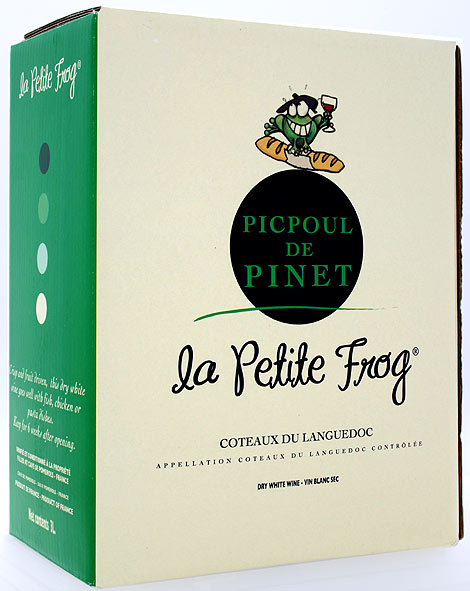
Although the French are at the forefront of organic wine, it’s much harder to get your hands on it all the way out here in California so we were especially excited to find this wine. Picpoul de Pinet is the varietal, a lesser known French white grape that’s gaining popularity with its full body, notes of grass and lemon, and a high acidity that makes it great for pairing with food.
 French Rabbit Merlot ($7 for 1-liter tetra pak)
Another organic wine maker, French Rabbit sources all of its grapes from sustainable farms in the Languedoc region of France. This region is known for its hearty, robust, and rustic wines and the Merlot is a great example of this. Nice spice, ripe cherry notes, and a soft finish make this wine particularly good with BBQ.
Badger Mountain Pure Red, Meritage ($24 for 3-liter box)
A blend of Cabernet Sauvignon, Sirah, and Merlot grown in Washington’s Columbia Valley, this wine is not only organic but a great deal. This is a rich jammy wine with hints of spice and a long rich finish.
 Bota Box Malbec ($16 for 3-liter box)
Malbec is a bigger red wine that’s dryer and more tightly structured than a Cabernet or a Merlot. It’s a wine that can get aggressive and is often used as a blending grape in French wines but can stand on its own in certain wine-making regions. This particular Malbec is softer with ripe fruit and hints of roasted coffee.
CalNaturale Chardonnay ($14 for 1 liter tetra pak)
A lightly toasted oak gives this chardonnay a full mouth-feel. It’s a rich and nutty chard that doesn’t have the tropical fruit flavors that come in a lot of other California versions. This particular wine has a much more French flavor profile of hazelnuts and vanilla.
* Also of note is the website for Octavin Home Wine Bar, which packages wine from small and “artisan” producers in tetra paks.



 Forget Burgundy